Samples, prototypes, and pre-production runs: what to order before you commit
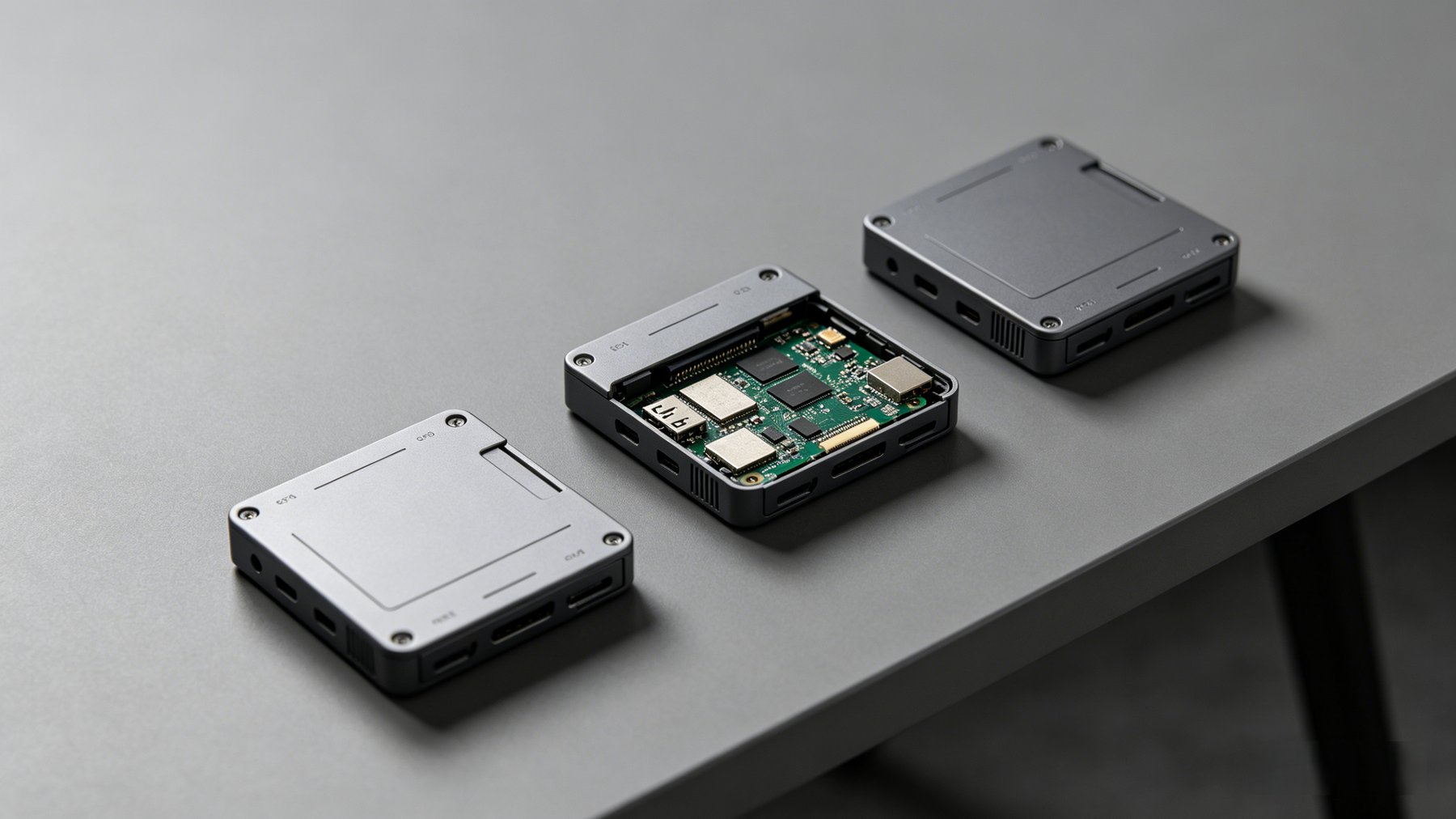
Somewhere between "I found a supplier" and "I placed the full order" is the most important step in any electronics sourcing project: confirming the product actually works before you commit real money. Almost every sourcing horror story has a moment where this step was skipped or hurried.
But "ordering a sample" isn't as simple as it sounds. There are actually three different testing stages — sample, prototype, pre-production run — and they answer different questions. Confusing them is expensive. This article explains the difference, what each one proves, and how much to spend at each stage.
The three types of test orders
Samples
A sample is a small quantity (typically 1–10 units) of a factory's existing product. You're confirming that what they're offering matches what you think it is. Samples answer questions like:
- Does the physical product look like the photos in the catalog?
- Does it actually work — does it turn on, connect, do the basic thing it's supposed to?
- Is the build quality consistent with the price quoted?
- Does the packaging, labeling, and included accessories match the listing?
Samples typically cost at "sample price" which is higher per unit than the production price. Factories charge this because the cost of pulling one unit off a line and shipping it separately is genuinely higher. For commodity items, you might pay 2–5× the unit price of a production run. For higher-value items, the markup is smaller but the absolute cost is higher.
Prototypes
A prototype is a purpose-built unit for something that isn't (yet) an existing product. You've given the factory a spec, a drawing, a BOM, or a reference part, and they're making one unit (or a few) to your design before committing to production.
Prototypes answer deeper questions:
- Can the factory actually make this to your specification?
- Does your design work in reality the way it worked on paper?
- Are there issues with assembly, fit, tolerances, or functionality that only emerge in physical form?
Prototypes cost meaningfully more than samples because they often involve custom work — one-off PCB fabrication, custom enclosures, manual assembly instead of production lines. Expect prototypes to cost $500–$5,000+ depending on complexity. For a custom electronics product, this is a reasonable number. For a commodity product, prototypes aren't usually the right stage to be at.
Pre-production runs
A pre-production run — sometimes called a pilot run — is a small batch (typically 50–500 units) made using the actual production process that will be used for the full order. This is the stage where tooling is tested, assembly lines are calibrated, and any mismatches between the prototype and mass-production become apparent.
Pre-production runs answer production-specific questions:
- Does the production tooling produce units that match the prototype?
- What's the actual defect rate under normal production conditions?
- Can the factory hit the target unit cost when they're doing it at real speed?
- Is the supply chain for components robust — do they actually get the passives, the ICs, the connectors, on schedule?
Pre-production is more expensive than the production unit price (because overheads are spread over fewer units) but less expensive per unit than a prototype. Typically 1.3–2× the production price. A pre-production run is the right insurance before a large order, and is usually skipped for smaller orders where the full order isn't much bigger than a pre-production run anyway.
What samples actually prove (and don't)
A common mistake: treating a good sample as a guarantee the production order will match. It isn't. A sample proves the factory can make a good unit. It doesn't prove they will make 10,000 good units at the price you agreed.
Three things samples do prove:
- The product is fundamentally correct. Right size, right function, right specs on paper.
- The factory can communicate and deliver. If they can't get one unit right and shipped on time, they can't get 10,000.
- The visual and tactile quality is acceptable. Photos lie; samples don't.
Two things samples don't prove:
- Consistency across a batch. Factories often cherry-pick their best unit for samples. The production average is usually slightly worse.
- Reliability over time. A sample that works on day one might fail at month three. Reliability takes time to assess, and one sample can't provide that.
How much to spend at each stage
A rough rule of thumb, scaled to your total order size:
| Stage | % of total order budget | Units involved |
|---|---|---|
| Samples | 1 – 3% | 1 – 10 units |
| Prototypes (custom only) | 5 – 15% | 1 – 5 units |
| Pre-production | 5 – 10% | 50 – 500 units |
| Full production | Remainder | Target quantity |
If you're buying 10,000 units of an off-the-shelf product at $2 each — total $20,000 — spending $400 on samples (2%) makes sense. Spending $3,000 on prototypes for a catalog product doesn't.
If you're developing a new product with custom tooling — total budget perhaps $100,000 — spending $8,000 across prototype and pre-production is not only reasonable but probably necessary. Skipping those stages to "save money" usually means discovering the problem at full-production scale, which costs vastly more to fix.
What to look for when the sample arrives
Your sample arrives. Before approving it, run through a checklist:
- Does it match the listing? Color, size, weight, accessories — all on the spec sheet.
- Does it work? Every function, not just the headline one. If it's a speaker, check bass AND treble at reasonable volumes. If it's a battery pack, test charge and discharge, not just "the LED turns on."
- How's the build? Visible seams, loose parts, imprecise fit, cheap-feeling materials where the catalog promised premium.
- Packaging and unboxing. Is the product protected? Do any accessories match the spec? Is there a manual, in the right language?
- Certifications and markings. If you specified CE, FCC, or other marks, are they actually on the unit? Are they genuine?
Red flags that tell you to walk away
Sometimes the right decision after a sample is to not proceed. Clear red flags:
- Fundamental function doesn't work on day one
- Visual quality significantly below what photos promised
- Missing certifications you specifically requested
- Packaging is cheap enough to damage the product in shipment
- Factory resists when you ask for photos during sample production ("why do you need to see?")
- Sample arrives with a different spec than the one quoted, with a "we improved it" explanation
Walking away after a bad sample costs you the sample fee. Walking away after a bad 10,000-unit production run costs much, much more.
Planning a first order and not sure what testing stage you need? Tell us about the project — we'll advise on the right sequence based on the specific product and quantity.